About Us, Our Website, and Coin Collecting FAQs
- Who are we ?
- Why are we giving away valuable information for
free ?
- What is the the
inspiration behind US Coin Values Advisor ?
-
Where is the
home base of US Coin Values Advisor?
- What online coin reports are available now ?
- How was the coin value trend data researched
?
- How far back in time does the data go ?
-
What is the purpose of the % rate of return
computations ?
- What exactly is meant by "return rate" ?
- What if I have a coin whose % rate of return cannot
be found in the Coin Value Tables ?
-
How was this website built?
Coin Collecting Frequently Asked Questions (FAQs)
- How much are my old coins worth ?
- What does a numismatist do ?
- How do I collect coins ?
- How does a beginner get started ?
- Where should the new collector start looking for
coins ?
- Where can I purchase collectible coins ?
-
What is the best way to handle and store valuable
coins ?
- What is coin grading all about ?
- What makes a coin valuable ?
- Is it a smart idea to clean my coins ?
- How do I know if a coin has been cleaned ?
- Are coins good investments ?
- Can I get my coins appraised ?
- What if I have a question that's not addressed here
?
We are US Coin Values Advisor, the Internet offshoot of Heritage
Coin Books (HCB). Founded in 1986 to publish historic value trends for
United States coins, HCB sold hard copy reports for many years.
Today, US Coin Values Advisor is providing coin trend data free of
charge to our website visitors.
We provide this data free to the public in
order to build traffic coming to our website. We link to several high quality
vendors who offer a wide range of products to the coin collecting public. We may
get paid a small referral fee anytime one of our visitors links to a vendor from
our website, OR we may receive a commission if we send someone who subsequently
makes a purchase. We believe in full disclosure and have no ulterior
motives.
The webmaster for this site is Daniel J. Goevert. In 1986, Dan
published a book entitled Value Trends of United States Coins. Estimated retail value trends from 1950 to 1985 were
researched for virtually every collectible US coin, in conditions ranging from
Good to Proof.
Value Trends was one of the most comprehensive works of its kind ever
published. The exposure helped Dan establish a consulting relationship as Coin
Editor with Edmund Publications from 1989 to 2000. Dan played a key role in
producing nearly 20 nationally distributed coin books during his consultancy with Edmund.
Dan's demonstrated skill as a researcher and penchant for detail are
useful tools for collectors seeking to bridge values from today's coin market to those
of past decades.
We are located in the Wichita, KS area.
For geography-challenged individuals, this is smack-dab center of the United
States.
Now available are trend reports for Flying Eagle cents, Indian Head
cents, Lincoln cents, Buffalo nickels, Mercury dimes, Morgan silver dollars,
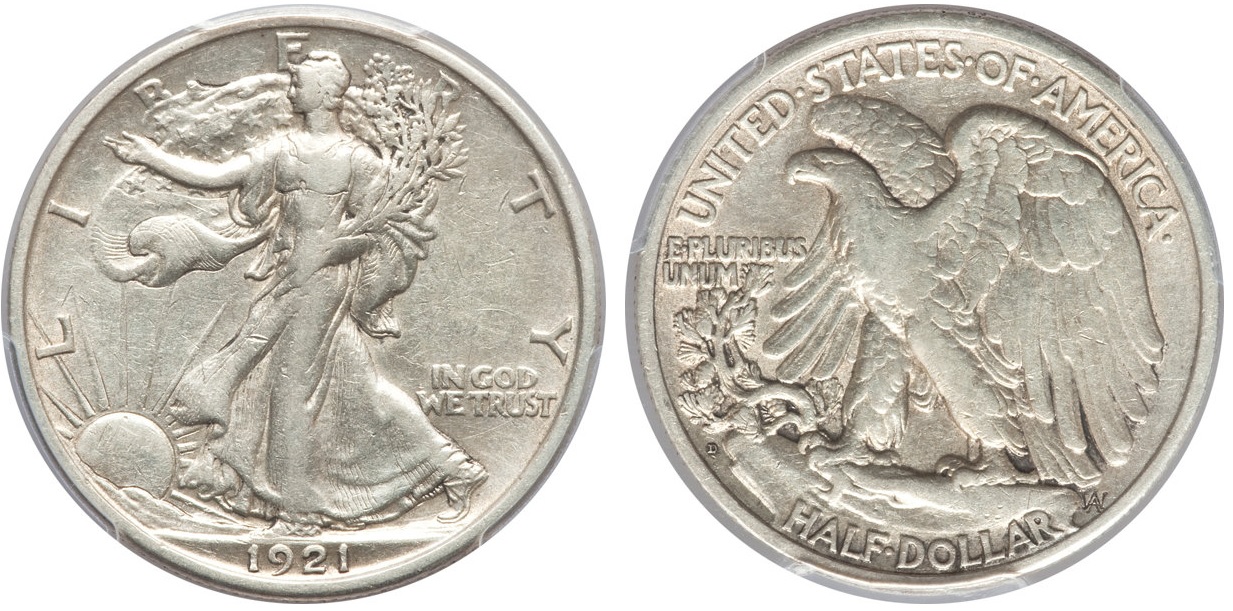
Peace dollars, $10 Gold Eagles, Standing Liberty quarters, and Walking Liberty half dollars. Many more coin value trend reports will be posted as time permits. Click
the
Coin Value Tables™
link for entry to the trend report page.
Very meticulously! The information in these report was researched from
vintage advertisements, auction results, and a variety of numismatic
publications, largely obtained from the vast holdings of the
American
Numismatic Association library.
The
Coin Value Tables™ track values for collectible
United States coins, estimating retail prices from
as far back as 1950, up to and including the year 2008.
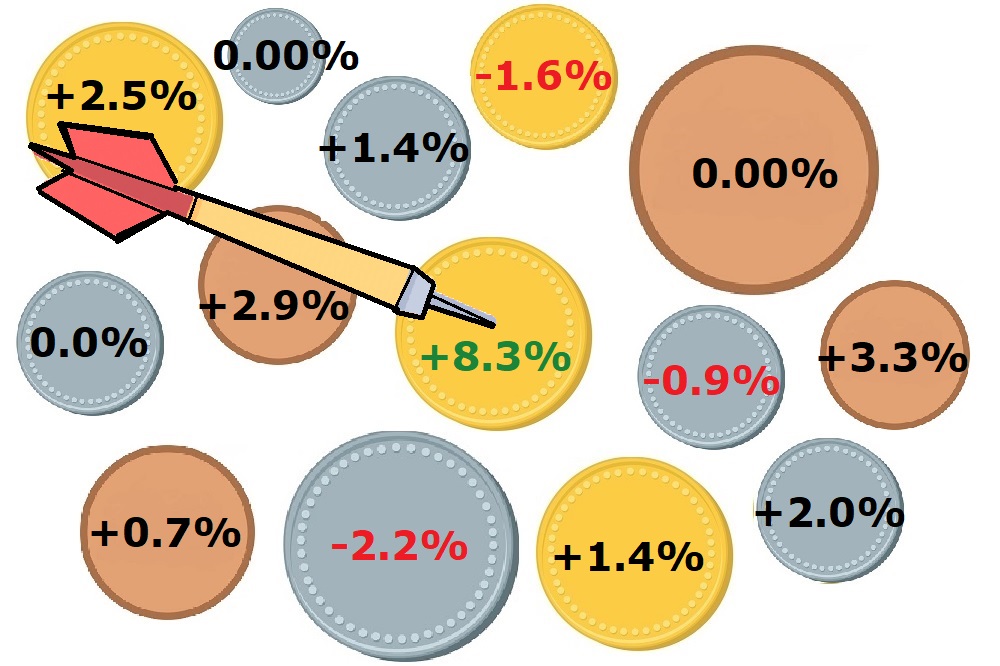
The purpose of the % rate of return is simply to facilitate comparisons from
one coin to the next, as to how much they change in value over time. Some
of our visitors may choose to analyze the data in other ways.
The return rates presented on this website are
compounded annual return rates, normally the yardstick for measuring
investment vehicles. For example, if the value of a commodity grows from $200
to $300 over a period of seven years, the return rates, computed to be 5.96%,
compounds itself annually for seven years by this amount. Thus:
$200 *
(1.0596 [Yr1]) * (1.0596 [Yr2]) * (1.0596 [Yr3]) * (1.0596 [Yr4]) *(1.0596
[Yr5]) * (1.0596 [Yr6]) * (1.0596[Yr7]) = $300
Of course, coins do not grow at a guaranteed uniform
rate, such as do bonds or Certificate of Deposits, but if a coin is purchased at
a certain price, and that price is juxtaposed with the value of the coin at some
later date, the effective compounded annual return rate can be calculated for the time
period in between.
The
Coin Value Tables™ contain compounded annual return rates from 1950 to the
present (a very long time period), 1980 to the present (a long time period),
1995 to the present (a relatively short, but not too short time period), and
200x to the present.
This data is normally sufficient to flush out "blue ribbon" coins deserving your
attention. However, if you have a coin whose compounded annual return rate
is not adequately represented in the tables, jump over to our "Coin
Rate of Return Calculator", enter data specific to your situation, hit the
'Calculate' button, and get your answer. The best part is that it's all FREE!
This website, US Coin Values Advisor,
was built through a system called Site Build It!, known as SBI! for short.
The nice thing about SBI! is that you don't need to be a technogeek to create a
website capable of attracting thousands of visitors a day. The most
important ingredients for success in the SBI! system is a passion for some topic
(in our case, it's US coins and history) and a desire to share your knowledge
with others. SBI! sites come in all shapes and sizes.
Take a look!
A much bigger listing of high-flying sites built through SBI! is
here, and
yes, US Coin Values Advisor has proudly been named to this honor roll.
Its great to make some extra money working from your home while writing about
something you enjoy! You can get more information about SBI! by clicking
here.
If you think SBI! might be a good match for your talents but have specific
questions, you can
ask SBI!
directly. We've been using SBI! for several years and can vouch that
it's not a gimmick, and is surprisingly affordable.
In addition to learning how your coins have changed in value over a period of
many years, you can also use the
Coin Value Tables™ to identify approximate retail values in today's market.
The websites of PCGS and
Numismedia
also post current estimated retail values.
Numismatics is the study of coins, paper money, tokens, and medals. A
numismatist is a person who passionately pursues numismatics. Coin
collecting is the most popular expression of numismatics.
Since it is virtually impossible to collect everything, most serious numismatists
choose to specialize in some way, such as collecting a series of coins (for
example, Mercury dimes, 1916-1945), or Type coins, where the goal is to find an
example from each coin series over a period of time (say, the
Civil War), or of
a particular monetary denomination. Try obtaining a specimen of each basic
silver dollar type... now there would be an impressive collection!
Visiting this website, as well as other coin-related educational sites, is an
excellent start. Learn something about coins before you make your first
coin purchase. Invest a little up front in knowledge-building, and you'll
save a lot of time, money, and frustration later on. One book we highly
recommend for the novice is
Coin Collecting for Dummies. This is a great
reference for the budding coin collector, but it flows so well that even
veterans of the hobby will have difficulty putting it down. Another good one is
How
to Make Money in Coins Right Now. In spite of its name, this is not an
over-hyped manifesto on "how to strike it rich" with coins. On the
contrary, anyone who absorbs this material will have built a solid foundation in
numismatics and market realities. Also, weekly publications such as
Numismatic News
and
Coin World
are terrific resources for monitoring the pulse of the coin collecting hobby.
A good place to start collecting is to search for coins out of regular
circulation. You'll get a taste for what coin collecting is like, with
virtually no downside risk by
collecting State Quarters, which has become a very
popular pastime in the USA these days, with many State quarter collectors
bridging over to mainstream coin collecting. Flushed with state pride, US
history, and artistic excellence, no small wonder this program has helped to
swell the ranks of collectors. One overlooked area for beginning
collectors is Jefferson nickels. Surprisingly, with the exception of WWII
silver alloy issues, nearly every Jefferson date and mintmark can still be found
in circulation. Go to the bank, get some rolls, and have hours of fun
looking for that rascally elusive 1939-D!
If you've been bitten by the "coin bug", sooner or later you'll likely want
to move on to collectible coins. Since you don't stand a chance of finding
an
1877 Indian Head cent in your pocket change, for example, you'll have to pay
money to someone who has one and is wanting to sell. There are numerous routines for buying
coins, discussed in detail at our
Coin
Buying Advice section.
Valuable coins should be handled and stored with great care.
Adding wear or inducing damage to your collection can reduce its value
significantly. Fortunately, a wide range of
Coin Supplies
is available to meet your specific needs and your budget.
The condition of a coin is described by its grade. The grade is an important
factor in determining value. Click for our
Grading Coins
page to get an in-depth introduction to grading coins.
Ultimately, values are based on essentially the same set of rules as any
other commodity. If everyone wants to buy, prices go up, but if everyone
wants to sell, prices drop. Let's take a look at the supply/demand theory
and how it relates to coin values. What exactly is the supply?
Simply stated, the supply can be defined as the number of coins available for
sale at a specific point in time. Mintage is the first indicator to be
studied when guessing the available supply of a given coin. The mintage
figure for a given date and mint mark tell you that the existing total today can
be no large than that number. Survivorship is the key modifier to the
original mintage quantity. Over time, many millions of coins have been
melted, destroyed, lost, or otherwise eliminated, to reduce the supply. More
concisely, the volume of coins issued in the past is finite, can never increase,
and in all likelihood will shrink even more over time due to attrition.
Condition is the most critical stratification factor of the existing supply.
High grade coins with little or no wear are encountered far less frequently than well
worn siblings of the same date and mint mark.
Collectors comprise the demand portion of the equation. Collectors of
coins will pay a price to a coin owner to acquire a desired specimen, and are
willing to pay more for limited supply examples. This is especially true
for coin types popular with large numbers of collectors. Hence, the coins
most heavily sought after, and having the best grades within a limited supply,
will always command high prices. A good example is a
1909-S VDB Lincoln
cent grading MS-65 (RED) condition. Priced at more than $8000 for a properly
graded specimen, it certainly is a
rare coin desired by many people. With collectors competing against one another
for, at best, a fixed supply of coins, we see the formation of a solid price
foundation within the coin market.
Generally speaking, NO!!!. You will probably do more harm than
good. Abrasive treatments are the absolute worst. Coins that have
obviously been cleaned always suffer in diminished value. If you have a
coin of some worth spoiled by unsightly tarnish or other foreign substances,
contact a numismatic professional with experience in cleaning coins.
Expert coin cleaners have techniques, such as
dipping, to remove unattractive adherents without doing damage to the coin.
Some coins are naturally tarnished, but in an attractive manner. This
effect is called
Toning, and is desired by many collectors willing to pay
premiums above book value to acquire such a specimen. So before you even
think about cleaning a toned coin, be mindful of this fact.
With less valuable coins that are simply dirty, you can take action at home to remove the
dirt safely. Soak the coin for at least 48 hours in olive oil or a soapy
solution. Rinse thoroughly with water, followed by drying with air
compressor or hair dryer. At no time during this procedure should you rub
a cloth, your finger, or anything else across the coin's surface. You will
leave tiny scratches.
Commercial coin cleaners are also available for cleaning dirty coins, and
accelerate the process with improved results.
If cleaned with an abrasive, the coin will have
hairlines, visible under magnification. Also, some dirt will still
remain in the deepest crevices on the coin. Coins cleaned with abrasives
are relatively easy for the trained eye to catch, and should be discounted in
value severely.
Dipped coins, if done expertly, may be impossible to detect. But then,
if it is impossible to detect, the whole question of cleaning becomes
neutralized for that particular coin. On the other hand, if a coin can be
determined to have been dipped, it will be rejected by large portions of the
numismatic community, unless marked down in price accordingly.
A good reference to help you learn about recognizing cleaned coins is Coin Collector's Survival Manual . The author, Scott Travers (who just
happens to be one of the most successful numismatic writers around) informs
readers how to detect cleaned/doctored/counterfeit coins. Other topics
crucial to the coin collector are presented also.
Well, they can be, but they should be viewed first for their artistic and
historic qualities, with secondary consideration given to their investment
potential. However, no one buys coins with the desire or expectation to
see them fall in value. Naturally, most buyers hope their coins will
increase in value over time. For this reason, many numismatists select
coins primarily for their collecting pleasure, while simultaneously building a
collection that will be worth more in the years ahead. One purpose for
including the Percent Return Rate computations in the
Coin Value Tables™ is to assist individuals with this dual strategy to reach their
goals.
Several books have been written to help
collectors identify coins with the best profit potential. A good companion
to the Coin Value Tables is a book authored by coin dealer insider Scott
Travers,
How
to Make Money in Coins Right Now. (haven't we heard of this guy
already?). In addition to presenting high flying
coins, Travers guides the reader through a wealth of information on how the coin
market operates.
Yes, there are many places where you can get your coins appraised.
Since fees are often charged for this service, you really owe it to yourself
first to at least get a rough idea of what your coins are worth, if you don't
already. By following the advice prescribed by our website, you should be
in a position to accomplish just that.
If, for whatever reason, you still want your collection appraised, you can
find a numismatist in your area by logging onto the
"Dealer Directory", published
by the ANA. Everyone on this list is bound by a code of ethics, so that's
a good start.
Another option is to contact a coin club. People who belong to coin
clubs thoroughly enjoy looking at coins, and are often experienced numismatists.
Someone in the club may be willing to provide an honest appraisal for free, in
exchange for the joy of seeing coins and sharing their knowledge. If
you're on a tight budget, this avenue might be worth a shot. Surf over to
www.coinclub.com to locate a coin club in
your vicinity.
If we can't provide an answer to one of your questions, jump over to the
website of the American Numismatic Association, the largest numismatic
organization in the world. They've got many years of experience at
fielding coin-related questions and have prepared answers on a
FAQ page to dozens of the most
popular queries put to them from the general public.
©Copyright
2008 by us-coin-values.advisor.com. All rights reserved.
Use of any content contained on these website
pages without the expressed written consent of us-coin-values-advisor.com is
strictly prohibited.
No copyrighted images may be used without
permission of original copyright owner. |
|